
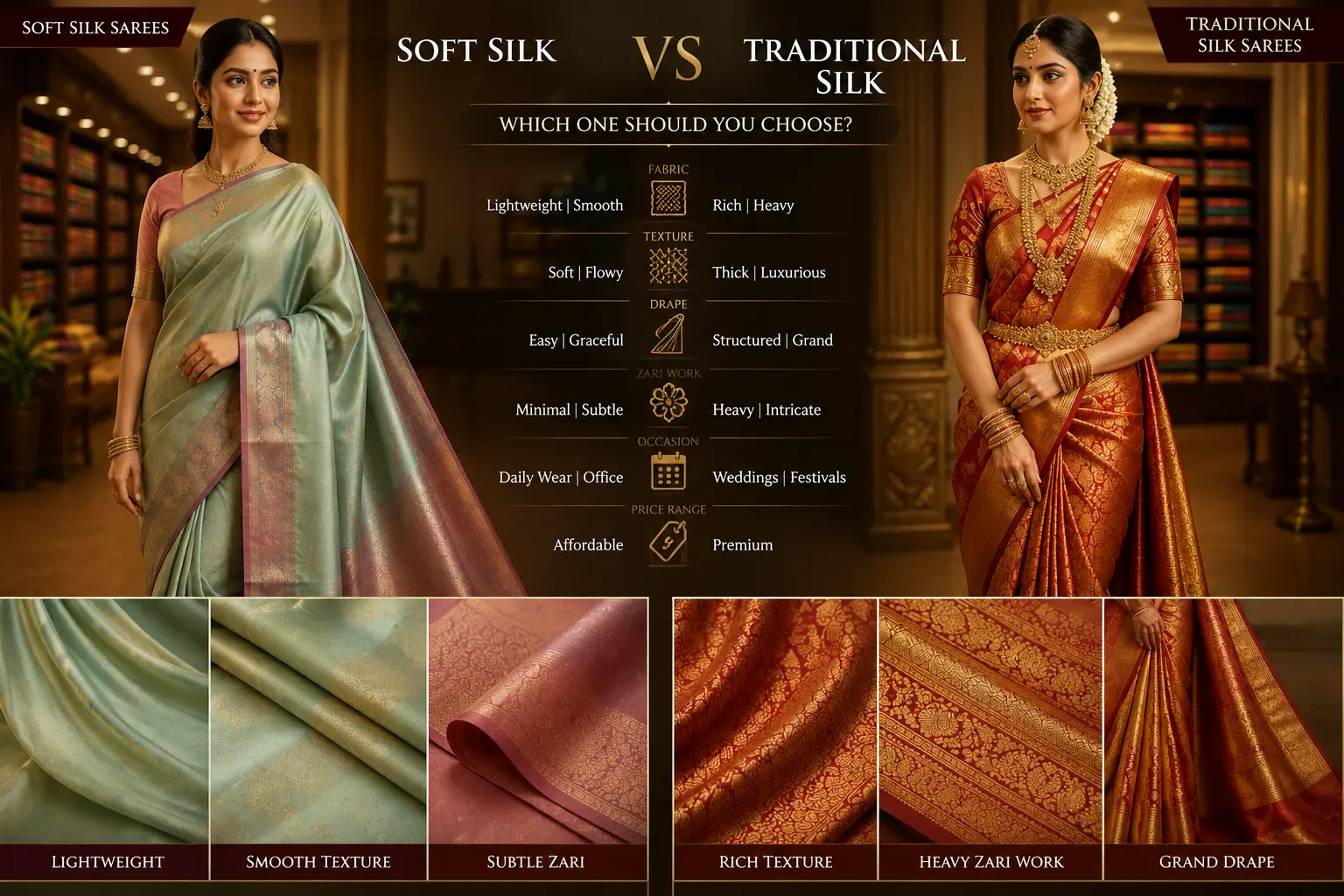
7 Best Tips: Soft Silk vs Traditional Silk Sarees – Which Should You Choose?
India’s rich textile heritage offers a breathtaking array of six-yard wonders, but when it comes to weddings and grand festivities, silk reigns supreme. If you are curating your ethnic wardrobe, you have likely encountered the ultimate sartorial dilemma: Soft Silk vs Traditional Silk Sarees.
Both variants are woven from pure mulberry silk, yet they offer completely different draping experiences, aesthetics, and price points. Whether you are a bride-to-be curating her trousseau or a wedding guest looking for comfortable elegance, understanding the nuances of these two fabrics is essential.
In this comprehensive guide, we will break down the weaving techniques, comfort levels, and styling rules to help you decide which masterpiece belongs in your closet.
1. Understanding the Roots: What is a Traditional Silk Saree?
When we talk about traditional silk, we are usually referring to heavyweight heritage handlooms like the illustrious Kanchipuram silk (Kanjeevaram), Banarasi, or Dharmavaram sarees. These garments are the cornerstones of Indian bridal fashion.
Traditional silks are woven using a “double warp” technique. Artisans twist three individual silk threads together to form a single robust yarn. This labor-intensive process gives the saree its famous crisp stiffness, heavy weight, and incredible durability. Furthermore, traditional silks are characterized by their opulent Zari work—intricate motifs woven using silk threads dipped in pure silver and coated with gold leaf.
Key Traits:
- Heavyweight and structured.
- Rich, contrasting borders (often woven using the traditional Korvai technique).
- High sheen and intricate metallic zari motifs.
If you are looking to explore our heritage weaves, check out our stunning Bridal Kanjeevaram Collection to see these traditional masterpieces in action.
2. The Modern Marvel: What is a Soft Silk Saree?
Soft silk sarees are the modern woman’s answer to traditional opulence. They are made from the exact same pure mulberry silk as traditional weaves, but the manufacturing process is tweaked to prioritize comfort and fluidity.
Instead of a multi-ply twisted yarn, soft silk sarees use a single, fine silk thread. The fabric is not treated with heavy starch during the weaving process. The result? A buttery-soft, lightweight fabric that flows like water and hugs your curves perfectly. Soft silks often feature “half-fine” zari or tested zari, which significantly reduces the overall weight of the garment while retaining a beautiful, festive luster.
Key Traits:
- Lightweight and highly breathable.
- Fluid drape that conforms to the body.
- Subtle sheen with minimalist or contemporary motifs.
3. The Great Debate: Soft Silk vs Traditional Silk Sarees
To make the right choice, you need to evaluate your lifestyle, the occasion, and your personal comfort preferences. Let’s look at the core differences in the Soft Silk vs Traditional Silk Sarees debate.
Weight and Draping Ease
Traditional silk is famously heavy. A pure Kanjeevaram can weigh anywhere from 1 to 2 kilograms depending on the density of the zari work. Because of the stiff fabric, draping requires skill, multiple safety pins, and patience. The pleats stand out crisply, giving the wearer a regal, structured silhouette. In contrast, soft silk is incredibly lightweight (often under 600 grams). It drapes like a dream, requiring minimal effort to pleat. The fabric falls naturally, making it much easier to walk, sit, and dance in.
Comfort and Breathability
If you are attending a summer wedding or an event in a humid climate, comfort is paramount. The single-warp construction of soft silk makes it highly breathable. You can comfortably wear it for 12 hours straight without feeling weighed down. Traditional silks, with their dense weave and heavy starch, trap heat easily, making them better suited for air-conditioned venues or winter festivities.
Aesthetic and Zari Work
Traditional silks scream grandeur. They feature heavy pallus (the loose end of the saree) adorned with traditional motifs like peacocks, mangoes (paisley), and temple borders. The pure gold and silver zari catches the light beautifully, making it perfect for main events like wedding ceremonies. Soft silks lean toward contemporary elegance. The motifs are often smaller, spaced further apart, and feature pastel hues, geometric patterns, or subtle floral designs.
For more insights into how silk is processed globally, you can read about the history of silk weaving techniques on Wikipedia.
4. Occasion Suitability: When to Wear What?
The deciding factor in the Soft Silk vs Traditional Silk Sarees choice often comes down to the calendar.
Choose Traditional Silk for:
- Your Own Wedding: Nothing beats the regal aura of a traditional heavy silk saree for a bride.
- Grand Receptions: The structured pleats and heavy gold zari look phenomenal under bright stage lights.
- Festivals: For auspicious occasions like Diwali, Pongal, or Durga Puja, a traditional weave honors cultural heritage.
Choose Soft Silk for:
- Pre-Wedding Events: Mehendi, Sangeet, and Haldi ceremonies require you to move around. Soft silk allows you to dance effortlessly.
- Office Parties and Formal Events: A pastel soft silk saree paired with a sleek blouse makes for exceptional power dressing.
- Wedding Guests: If you are a bridesmaid running around managing the bride, soft silk ensures you look festive without sacrificing mobility.
5. Price Point and Investment Value
Because traditional silk sarees use heavily twisted yarns and pure metallic zari, they are significant financial investments. They are heirloom pieces meant to be passed down from generation to generation. A pure Kanjeevaram can range from moderate prices to exorbitant sums for bespoke bridal pieces.
Soft silks are much more accessible. Because they use less raw material (single warp) and often use tested zari instead of pure silver/gold, the manufacturing cost is lower. This makes soft silk an excellent option for building a diverse saree wardrobe without breaking the bank. Want to see affordable luxury? Browse our latest Soft Silk Arrivals for inspiration.
6. Maintenance and Longevity
Both fabrics require love and care, but their longevity differs slightly.
- Traditional Silk: Thanks to the thick double warp, these sarees are incredibly durable. With proper care, they can easily last over 50 years. They must only be dry-cleaned and should be stored wrapped in unbleached muslin cloth.
- Soft Silk: While still durable, the fine single thread is slightly more prone to snagging on sharp jewelry. It also requires dry cleaning, but due to the lack of heavy metallic zari, you don’t have to worry as much about the zari oxidizing or turning black over time.
(Pro Tip: Learn exactly how to preserve your precious weaves by reading our detailed Saree Care and Storage Guide).
7. How to Style Your Saree
Styling plays a massive role in elevating your final look.
When styling a traditional silk saree, lean into heritage. Pair it with heavy antique gold jewelry, temple jewelry, or Polki sets. A contrasting, heavily embroidered blouse works wonders. Opt for a classic neat bun adorned with fresh jasmine flowers (Gajra).
When styling a soft silk saree, less is more. Contemporary jewelry pieces—like sleek diamond chokers, pearls, or oxidized silver—complement the fluid drape beautifully. Sleeveless blouses, halter necks, or boat-neck designs add a modern twist. Keep your hair in loose, soft waves to match the fluidity of the fabric.
The Final Verdict
When evaluating Soft Silk vs Traditional Silk Sarees, there is no single “better” option—only the option that is better for you at this moment.
If you want a timeless heirloom piece that commands attention and offers a regal, structured look for a major milestone, the traditional silk saree is your ultimate champion. However, if you prioritize comfort, modern aesthetics, and ease of draping without sacrificing the luxurious feel of pure silk, the soft silk saree is an unbeatable choice.
Ultimately, a well-rounded ethnic wardrobe should feature both. Embrace the grandeur of tradition for your biggest days, and enjoy the breezy elegance of soft silk for everything in between.