
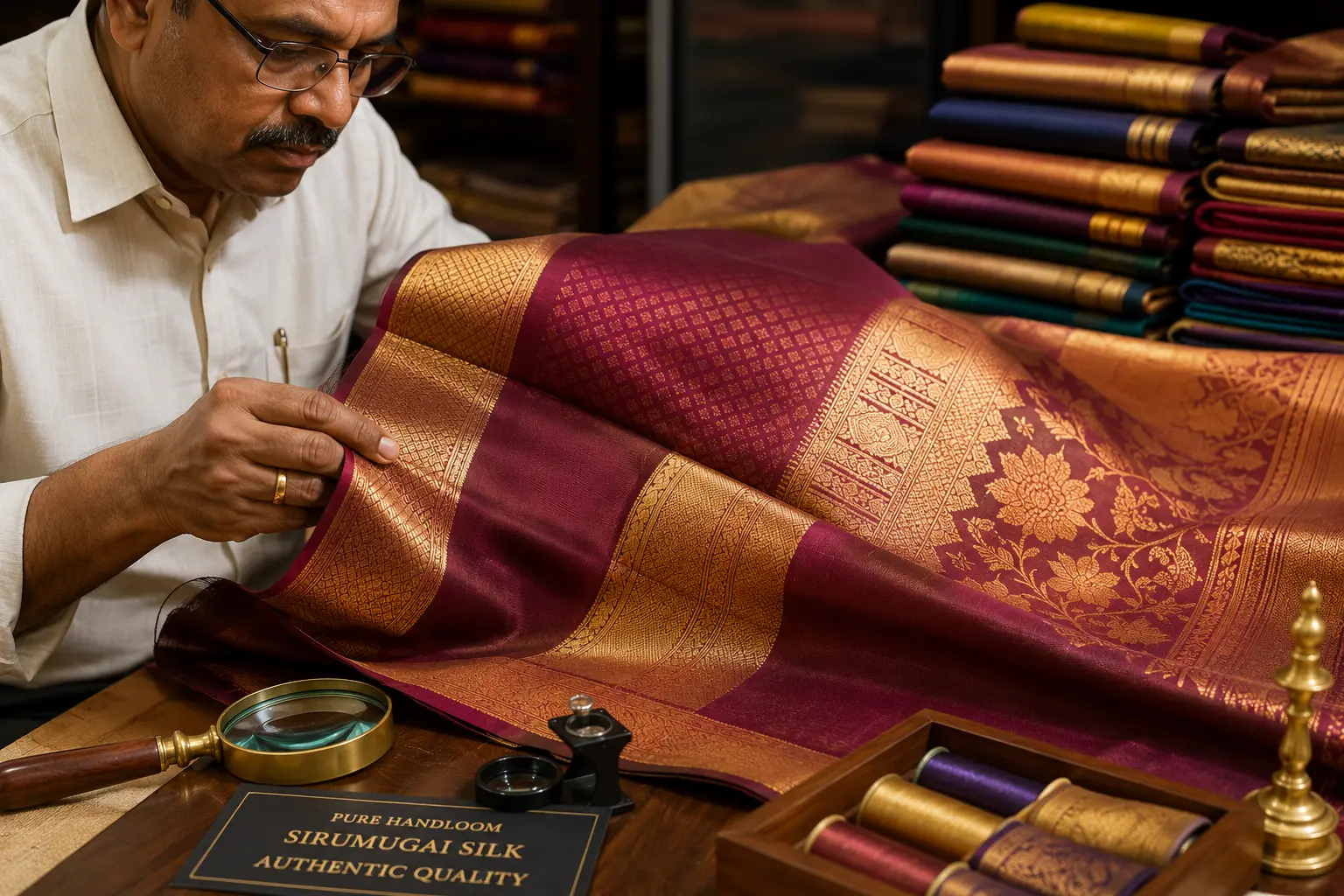
Selecting the perfect traditional South Indian silk is an emotional and deeply culturally significant journey. When you are looking for an ensemble that combines the rich heritage of Tamil Nadu with lightweight comfort, Sirumugai silk is the undisputed champion. Whether you are a bride preparing for your special day or a connoisseur of fine ethnic wear, navigating the myriad of choices can be overwhelming.
That is exactly why we have crafted this comprehensive Buying Guide for Sirumugai Pattu Sarees. By understanding the nuances of the weave, the authenticity markers, and the specific varieties available, you can make an empowered, secure investment. From checking selvedge marks to finding the perfect drape for your next big event, let this guide serve as your definitive resource.
The Heritage Behind the Silk
Before diving into the technicalities of purchasing, it is essential to understand what makes these garments so highly coveted. Situated on the banks of the Bhavani River, the town of Sirumugai is home to thousands of generational weaving families. The mineral-rich waters of the river are historically credited with giving the dyed silk yarns their unparalleled, vibrant luster.
Unlike power-loom fabrics churned out by the thousands, a genuine Sirumugai drape is a labor of love, requiring days of manual effort on traditional wooden Jacquard looms. This human element imparts a soul to the fabric, creating microscopic breathing spaces between the threads that result in the famous “soft silk” texture. For further insights into the rich legacy of Indian handloom clusters, you can explore the extensive archives at the Ministry of Textiles, Government of India.
The Essential Buying Guide for Sirumugai Pattu Sarees: 10 Best Tips
When you are ready to make a purchase, keep these ten critical factors in mind to ensure you are acquiring a genuine, high-quality masterpiece.
1. Verify the Silk Mark Certification
The most crucial step in any Buying Guide for Sirumugai Pattu Sarees is verifying authenticity. Always look for the official Silk Mark tag, a government-backed certification guaranteeing that the base fabric is woven from 100% pure, natural mulberry silk. Authentic retailers will proudly display this hologram-embedded tag on their premium inventory.
2. Feel the Texture and Drape
Sirumugai is celebrated globally for its “soft silk” varieties. Run the fabric through your hands. It should feel incredibly buttery, lightweight, and breathable. If the saree feels paper-stiff, rigidly structured, or scratchy, it is likely a highly-compressed, machine-made polyester blend.
3. Inspect the Selvedge (Borders)
Because authentic sarees are handwoven, the artisans must stretch the fabric manually using pins to maintain tension across the loom. Look closely at the top and bottom edges (the selvedge) of the saree. You should see a uniform line of tiny pinholes. Power-loom replicas will have flawlessly straight, smooth, and sometimes heat-sealed edges with zero pin marks.
4. Analyze the Zari Quality
The metallic threads (zari) used for the intricate motifs and borders should feel smooth and pliable. Premium Sirumugai weavers use high-quality half-fine or pure zari that retains its shine for decades. Synthetic replicas often use cheap plastic-core metallic yarns that feel abrasive against the skin and tarnish rapidly.
5. Check the Reverse Side of the Motifs
Flip the saree over and examine the back of the woven designs (like mangoes, peacocks, or temple borders). Authentic handloom pieces will feature tiny, hand-tied knots or slight thread floats where the artisan manually changed colors. A perfectly uniform, machine-clipped reverse side indicates a power-loom product.
6. Utilize a “Shop by Occasion” Filter
A hallmark of a premium shopping experience is organization. When browsing platforms like VELAAVANS Bridal Store, utilize their meticulously curated Shop by Occasion categories. Selecting specific sections like Weddings & Events or Festive wear ensures you are looking at the appropriate weight, grandeur, and color palette for your specific needs, saving you hours of aimless scrolling.
7. Match the Color to the Event Time
Sirumugai weavers are masters of dual-tone weaving, where the warp and weft are dyed in contrasting colors to create a shimmering, iridescent effect. For daytime Muhurthams or morning rituals, opt for pastel shades, bright yellows, or soft greens. For evening receptions, deep maroons, royal blues, and rich emeralds make a striking impact under artificial lighting.
8. Look for Established Retail Heritage
Trust is paramount when investing in luxury silk. Purchase from boutiques that are transparent about their history and sourcing. A reputable store will often proudly display their business milestones—such as interactive counters showcasing their years of experience and thousands of satisfied customers—giving you confidence in their industry authority and direct ties to weaver cooperatives.
9. Evaluate the Weight-to-Grandeur Ratio
One of the primary reasons brides choose Sirumugai over Kanchipuram is the weight. Test the saree by draping it over your shoulder. It should visually look incredibly grand and heavy due to the intricate zari work, but physically feel light enough to wear comfortably for 8 to 12 hours without causing shoulder fatigue.
10. Understand Proper Storage Before Buying
As outlined in this Buying Guide for Sirumugai Pattu Sarees, pure silk is an investment that requires maintenance. Before purchasing, ensure you have the means to care for it. You will need unbleached cotton or muslin cloth bags for storage (never plastic) and access to a reliable professional dry cleaner to maintain the fabric’s integrity over the years. To learn more about preserving delicate natural fibers, consult the resources provided by the Crafts Council of India.
The Saree Varieties: What Fits Your Needs?
To make the most of this Buying Guide for Sirumugai Pattu Sarees, you must familiarize yourself with the specialized categories produced by these master weavers.
| Saree Type | Distinguishing Features | Best Suited For |
| Pure Soft Silk | Extremely pliable, brilliant luster, densely packed but lightweight threads. | Receptions, major festivals, and modern bridal wear. |
| Kora Cotton-Silk | A blend of unbleached silk and fine cotton. Slightly crisper but incredibly breathable. | Daytime summer events, religious ceremonies, and corporate ethnic wear. |
| Bridal Brocade | Features heavy, continuous zari work across the entire body of the saree. | The main wedding Muhurtham or grand traditional milestones. |
| Contrast Border (Korvai) | The body and border are woven separately and interlocked seamlessly. | Traditional temple visits and classic South Indian events. |
Navigating Your Purchase Journey
Shopping for a heritage garment should be as delightful as wearing it. Whether you are a local resident stepping into a physical showroom or an international buyer looking to secure a masterpiece online, applying the principles in this Buying Guide for Sir