
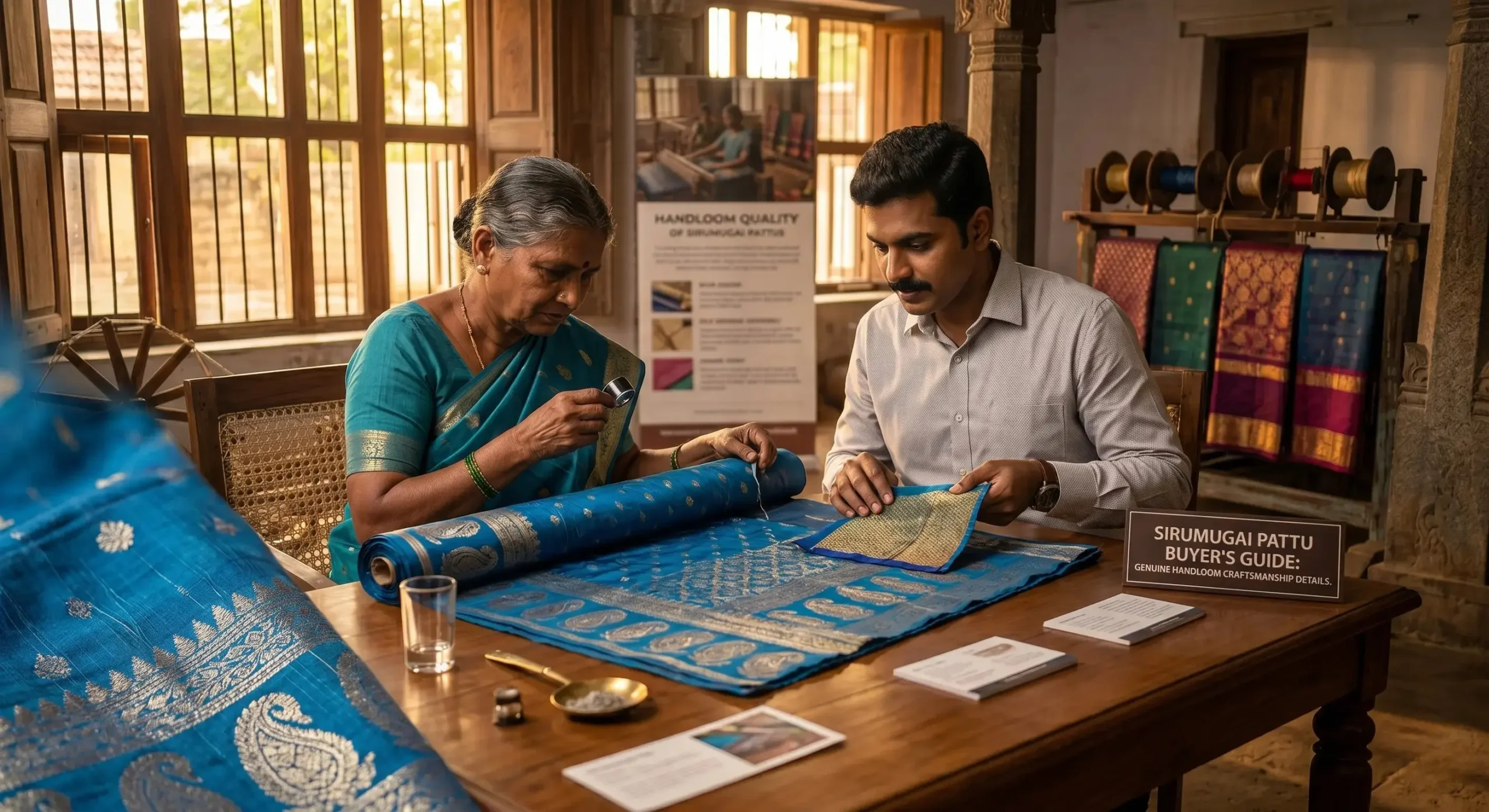
There is nothing quite as elegant, culturally rich, and breathtakingly beautiful as a pure traditional South Indian handloom drape. For generations, brides and textile enthusiasts have turned to specific regions in Tamil Nadu to find their perfect festive wear. While many instantly think of Kanchipuram, the true connoisseurs of lightweight, exceptionally soft traditional attire know that Sirumugai is a treasure trove of unparalleled artistry.
However, with the massive surge in demand for these luxurious garments, the textile market has unfortunately been flooded with mass-produced, machine-made replicas. Power loom factories are increasingly producing synthetic imitations that attempt to mimic the authentic handwoven magic. For anyone investing in high-end ethnic wear, learning how to identify original Sirumugai silk sarees is no longer just helpful—it is an absolute necessity.
In this comprehensive, in-depth buyer’s guide, we will walk you through the seven foolproof methods and expert techniques you need to ensure your luxury purchase is 100% genuine.
The Rising Challenge: Handloom vs. Powerloom
Before diving into the exact identification methods, it is vital to understand why replicas exist in the first place. Authentic Sirumugai soft silk sarees are painstakingly crafted on wooden Jacquard handlooms. A single masterpiece can take a master weaver and their family anywhere from three days to over a week of continuous, manual labor to complete. Every thread is interlaced with human precision, requiring immense physical effort and generational skill.
Conversely, mechanized power looms run on electricity and computer programming. They can churn out dozens of identical synthetic sarees in a single day at a fraction of the cost. Because these machine-made dupes often use low-grade artificial silk (art-silk) or polyester blends, they lack the breathability, heirloom durability, and structural integrity of a genuine piece. Knowing how to identify original Sirumugai silk sarees protects your wallet and actively supports the authentic weaving communities whose livelihoods depend on ethical retail.
To explore the broader socioeconomic impact of supporting genuine artisans and the difference between hand-woven and machine-made textiles, you can read the extensive resources provided by the Ministry of Textiles, Government of India.
7 Expert Methods to Spot an Authentic Sirumugai Saree
When you step into a boutique or evaluate a piece you have ordered online, use this systematic checklist. These seven tactile and visual tests will definitively show you how to identify original Sirumugai silk sarees without needing any specialized equipment.
1. Inspect the Selvedge (The Pinhole Test)
The absolute most reliable physical indicator of a pure handloom saree lies at its edges. When an artisan operates a traditional handloom, they must maintain immense tension across the width of the fabric to ensure the weave remains tight and structurally sound. To do this, they use a small wooden or metal tool with pins to stretch the cloth, shifting it upward as the weaving progresses.
This manual stretching leaves behind a series of tiny, evenly spaced pinholes along the top and bottom borders (the selvedge) of the saree. Power looms do not require this manual tensioning mechanism. If you run your fingers along the extreme edge of the fabric and it is flawlessly smooth, perfectly straight, or appears to be heat-sealed with zero pin marks, you are looking at a machine-made replica.
2. The Reversibility and Float Check
Authentic handloom weaving is a human endeavor, meaning it carries beautiful, microscopic imperfections that tell the story of its creation. Turn the saree over and carefully examine the reverse side of the intricate motifs, such as the mango (paisley) patterns, peacocks, or the grand pallu.
In a genuine Sirumugai weave, the threads used to create these extra warp or weft motifs are cut and tied off manually by the weaver. You will see tiny, soft knots or slight thread floats (loose threads) that look organic. In a power loom saree, the reverse side is uniformly flawless, with perfectly clipped threads and zero human irregularities.
3. The Signature Soft Silk Touch
Sirumugai is historically famous for producing incredible “soft silk” and Kora cotton-silk blends. The way the fabric drapes and feels against your skin is a massive giveaway. Because handlooms interlock the warp and weft threads using human rhythmic force rather than hydraulic machine pressure, the resulting fabric has microscopic breathing room.
This gives genuine Sirumugai sarees a buttery, pliable, and incredibly soft texture that hugs the body elegantly. Synthetic power loom silks, on the other hand, are woven so densely and tightly that the fabric feels stiff, paper-like, or overly slick to the touch. They do not pleat beautifully and tend to flare out stiffly when draped.
4. Analyzing the Zari (Metallic Threads)
The shimmering gold and silver designs on a saree are created using zari. True Sirumugai sarees utilize high-quality zari that is smooth, non-abrasive, and tightly wound. If you gently rub the zari work against the sensitive skin of your inner wrist, it should feel relatively smooth and comfortable.
Cheap replicas use plastic-core or heavily metallic synthetic yarns that feel scratchy, sharp, and rough. Over time, this fake zari will rapidly oxidize, turning a dull, ugly black, whereas premium handloom zari retains its majestic luster for decades if stored properly.
5. Look for the Silk Mark India Certification
If you want to know how to identify original Sirumugai silk sarees with zero guesswork, look for the official paperwork. The most definitive guarantee of pure mulberry silk in India is the Silk Mark.
Managed by the Silk Mark Organisation of India, this certification acts as a government-backed hallmark. A genuine Silk Mark tag features a unique QR code and a high-security hologram. Any reputable retailer selling pure silk will proudly display and provide this tag with your purchase. If a seller insists the saree is pure silk but cannot produce a Silk Mark, it is highly recommended to reconsider the purchase.
6. The Flame Test (The Burn Analysis)
Disclaimer: Only perform this test on one or two loose threads pulled from the absolute edge of the fabric after purchasing. Do not attempt this on a saree you have not bought!
Pull a single warp thread and a single weft thread from the saree and light them with a match.
- Pure Handloom Silk: Because silk is a natural protein fiber (similar to human hair), it will burn slowly, emit a smell identical to burnt hair, and leave behind a brittle, dark ash that easily crumbles into fine powder when rubbed between your fingers.
- Synthetic/Polyester Replica: Artificial silk will melt rather than burn. It will smell intensely like burning plastic or chemicals, and it will leave behind a hard, sticky, un-crushable black bead.
7. The Sourcing and Pricing Reality Check
Finally, applying basic economic logic is a crucial step in learning how to identify original Sirumugai silk sarees. Pure mulberry silk yarn is highly expensive, and paying a skilled artisan for a week of labor requires fair compensation. If a deal seems too good to be true, it always is.
If you see a “Pure Sirumugai Bridal Silk Saree” priced at a fraction of standard market rates, you are almost certainly looking at a power loom art-silk dupe. To guarantee authenticity, you must purchase from highly reputed, established boutiques. For instance, when you browse a trusted platform like VELAAVANS Bridal Store, you are guaranteed ethically sourced, high-grade heritage weaves.
Authentic Handloom vs. Powerloom: A Quick Reference Guide
Keep this simple summary handy the next time you go shopping for your bridal or festive wardrobe:
| Feature to Check | Original Sirumugai Handloom Saree | Machine-Made Fake (Powerloom) |
| Border / Selvedge | Uneven with visible tension pinholes | Perfectly straight, smooth, no holes |
| Motif Reverse Side | Organic hand-tied knots, slight floats | Mechanically uniform, flawlessly clipped |
| Fabric Drape & Feel | Breathable, incredibly soft, easy to pleat | Stiff, unyielding, feels like plastic/paper |
| Zari Quality | Smooth to the touch, lasting shine | Scratchy, rough, prone to rapid fading |
| Certification | Carries the official Silk Mark Tag | No official certification provided |
Ensuring Your Legacy Lasts
Knowing how to identify original Sirumugai silk sarees is only the first step of your journey; preserving them is the second. Once you have brought your masterpiece home, never store it in a plastic cover, as trapped moisture will damage the silk. Wrap your pure handloom garments in unbleached cotton or muslin cloths.
Furthermore, ensure you take the sarees out of your wardrobe every three to four months, let them air dry in a shaded room, and refold them along different lines to prevent the delicate silk threads from weakening at the creases. For cleaning, strictly rely on professional dry-cleaning services; never attempt to wash a pure silk handloom saree in a home washing machine.
Conclusion
Understanding exactly how to identify original Sirumugai silk sarees empowers you as a consumer. It allows you to confidently navigate the bustling textile markets, ensuring that your hard-earned money is invested in a genuine, heirloom-quality garment rather than a cheap, factory-made imitation.
By checking the selvedge for pinholes, feeling the buttery drape of the soft silk, and insisting on the Silk Mark certification, you are doing more than just buying a beautiful outfit. You are directly participating in the preservation of an ancient Tamil Nadu craft, supporting rural weaving families, and keeping the rich, vibrant heritage of the handloom industry alive and thriving.
Are you ready to find the authentic drape of your dreams? Discover genuine, certified masterpieces by browsing our highly curated [Shop by Occasion – Insert Internal Link] category, or return to the main VELAAVANS Bridal Store homepage to explore our latest authentic handloom arrivals!