
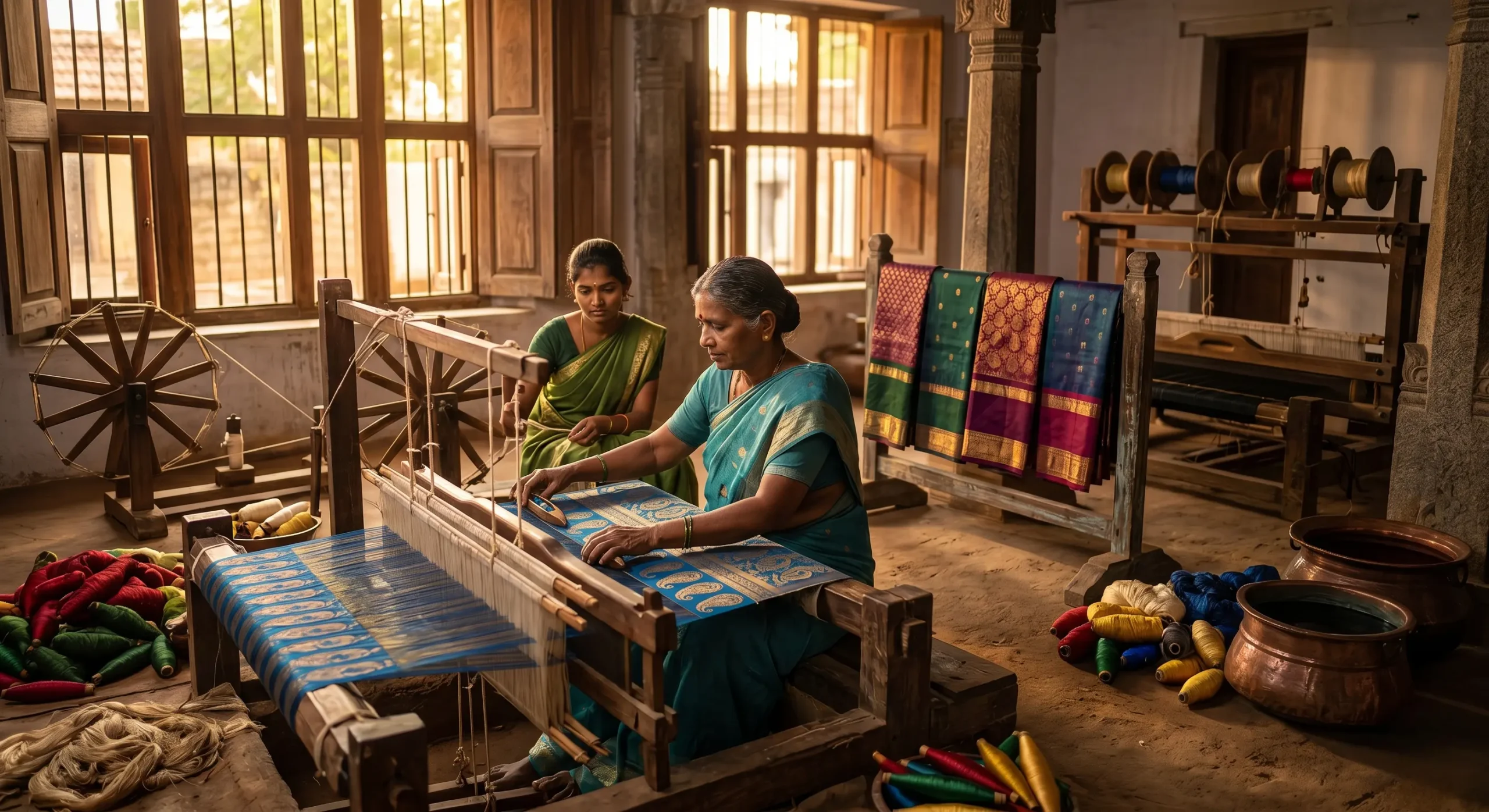
When we think of traditional South Indian silk, our minds often rush to Kanchipuram. However, nestled on the banks of the Bhavani River in the Coimbatore district of Tamil Nadu lies a hidden gem of textile artistry. The heritage and history of Sirumugai handloom weaving is a tale of resilience, intricate craftsmanship, and generational passion.
Known for producing some of the most breathtaking soft silk and Kora cotton sarees in India, Sirumugai has transformed from a humble village into a powerhouse of the Indian textile industry. But what makes this specific style so special?
In this comprehensive guide, we will dive deep into the origins, techniques, and 7 incredible secrets that make Sirumugai handloom weaving a cherished part of India’s cultural tapestry.
The Rich History and Origins of Sirumugai Weaving
The roots of Sirumugai handloom weaving stretch back over a century. It was primarily pioneered by the Devanga community, a group of traditional weavers who migrated and settled across different parts of South India. Finding the serene environment and the water of the Bhavani River ideal for dyeing yarn, they established their looms in Sirumugai.
Historically, these weavers started by crafting simple cotton sarees for daily wear. However, as royal patronage and local demand for grander attire grew during festivals and weddings, the artisans adapted. They began incorporating pure silk threads, half-fine zari (metallic thread), and complex motifs.
Today, the region is home to thousands of weaving families. The craft has survived industrialization purely because the human touch, precision, and soul embedded in true Sirumugai handloom weaving simply cannot be replicated by power looms. To understand the broader impact of India’s handloom sector on rural employment, you can read more from the Ministry of Textiles, Government of India.
7 Incredible Elements of Sirumugai Handloom Weaving
To truly appreciate the value of a Sirumugai saree, one must look at the painstaking labor and unique characteristics that define the craft. Here are the 7 incredible elements that set this weaving tradition apart.
1. The Magic of Kora Cotton and Soft Silk
While Sirumugai produces pure silk, it is incredibly famous for its “Kora Silk” or “Kora Cotton.” This is a specialized fabric woven using unbleached, raw silk and fine cotton. The result is a saree that possesses the rich sheen of silk but the breathable, lightweight comfort of cotton, making it perfect for the tropical Indian climate.
2. Intricate Jacquard Looms
Modern Sirumugai handloom weaving relies heavily on Jacquard looms. Instead of manually lifting warp threads to create patterns, weavers use punched cards. This allows for incredibly complex, continuous motifs like peacocks, mangoes (paisley), and temple borders to be woven directly into the fabric with flawless precision.
3. The Bhavani River’s Unique Water
Dyeing is a crucial step in the handloom process. Weavers often attribute the striking, long-lasting vibrancy of Sirumugai sarees to the mineral composition of the Bhavani River water used during the yarn-dyeing phase. The natural setting of the town plays a literal role in the final product.
4. Generational Craftsmanship
This is not a skill learned in a modern classroom. The art of Sirumugai handloom weaving is passed down through generations. Children grow up listening to the rhythmic clacking of the loom (the thari), learning to spin yarn, load bobbins, and eventually operate the massive wooden looms themselves.
5. Eco-Friendly and Sustainable Practices
In an era of fast fashion, Sirumugai stands out for its sustainability. Handlooms consume zero electricity. Furthermore, many artisan clusters are moving back toward natural, vegetable-based dyes, ensuring that the waterbed remains unpolluted. Organizations like the Crafts Council of India actively promote these sustainable handloom practices.
6. Lightweight Grandeur
One of the main complaints about traditional bridal silks is their immense weight. Sirumugai weavers solved this. By using high-quality fine silk threads and optimizing the density of the zari, they create sarees that look exceptionally grand and bridal but weigh significantly less than their Kanchipuram counterparts.
7. Empowering Rural Economy
Every Sirumugai saree purchased supports an entire ecosystem. From the spinners and dyers to the master weavers and pattern designers, Sirumugai handloom weaving is a vital economic engine that keeps rural Tamil Nadu thriving, preventing forced migration to overcrowded cities.
Sirumugai vs. Kanchipuram: A Quick Comparison
If you are a saree enthusiast, you might wonder how Sirumugai stacks up against the famous Kanchipuram silk. While both are stunning, they serve slightly different needs.
| Feature | Sirumugai Silk | Kanchipuram Silk |
| Weight | Lightweight, easy to drape for long hours. | Heavier, due to dense silk and thick zari. |
| Texture | Incredibly soft, pliable, and breathable. | Crisp, stiff, and highly structured. |
| Specialty | Soft silks and Kora cotton blends. | Pure, heavy mulberry silk with pure gold/silver zari. |
| Best For | Receptions, parties, and everyday luxury. | Main bridal wear and grand temple rituals. |
Looking to add one of these lightweight beauties to your wardrobe? Explore our exclusive collection of [Authentic Sirumugai Soft Silk Sarees Here – Insert Internal Link].
The Process: From Yarn to Six Yards of Magic
The creation of a single saree via Sirumugai handloom weaving is an exercise in immense patience. It takes roughly 3 to 5 days to weave a standard soft silk saree, depending on the complexity of the pallu (the loose end of a saree) and the borders.
- Procuring and Treating the Silk: Raw silk is sourced and boiled to remove natural gums, making it soft.
- Dyeing: The yarn is submerged in boiling vats of color, often dyed in vibrant dual-tones (like a warp of red and a weft of blue to create a gorgeous purple sheen).
- Spinning: The dried yarn is spun onto bobbins and pirns using a spinning wheel (Charkha).
- Warping: The threads are stretched tightly across the loom to create the base of the saree.
- Weaving: The weaver uses the shuttle to pass the weft threads horizontally through the warp. Hands and feet work in perfect, rhythmic synchronization.
To read more about the technical steps of Indian handloom, you can check out this comprehensive guide by The Textile Association (India).
Preserving the Legacy
Despite its beauty, the heritage of Sirumugai handloom weaving faces modern challenges. The rise of cheap, machine-made knockoffs threatens the livelihood of genuine artisans. Power loom fabrics masquerading as handlooms undercut prices and dilute the region’s reputation.
To combat this, the weaver cooperative societies in Sirumugai are pushing for stricter geographical and quality regulations. As consumers, the best way we can preserve this historic art form is by educating ourselves, demanding authenticity, and buying directly from certified weavers or trusted brands that prioritize ethical sourcing.
If you want to support these artisans while embracing traditional fashion, be sure to check out our [Festive Silk Saree Collection ] for guaranteed authentic weaves.
Conclusion
The story of Sirumugai is not just about fabric; it is about preserving an ancient way of life. The 100-year-old heritage of Sirumugai handloom weaving is a testament to the skill, creativity, and endurance of Tamil Nadu’s artisans. From the mineral-rich waters of the Bhavani to the rhythmic clacking of the Jacquard looms, every step of the process is infused with soul.
By choosing a Sirumugai saree, you aren’t just buying a piece of clothing. You are wearing a piece of history, an incredible work of art, and directly supporting the hands that keep India’s rich textile legacy alive.